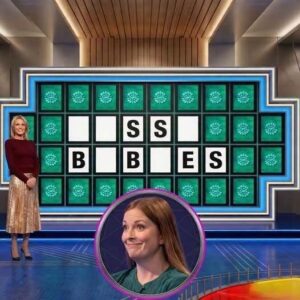
He arrived as a quiet underdog, the kind of contestant producers barely notice at first glance. But with each solved puzzle, his confidence grew, and so did the crowd’s affection. He wasn’t slick or rehearsed; he was real. By the time the final round appeared, people at home were rooting for him like family, already imagining him driving that Jeep off the lot.
When the last puzzle appeared and his mind went blank, the disappointment was immediate but strangely gentle. Instead of anger, he doubled over laughing, clapping for the winner, refusing to let bitterness stain the moment. That clip spread everywhere—not as a meme of failure, but as a rare portrait of humility under pressure. Viewers didn’t remember the missing word. They remembered the man who showed that how you lose can be its own quiet kind of victory.