Just hours before Trump’s self‑imposed deadline to escalate military action against Iran
However, when details of the Iranian plan began to emerge, analysts and foreign policy experts reacted with surprise and, in some cases, stark disbelief at the list of demands reportedly included in the proposal.
Just hours before Trump’s self‑imposed deadline to escalate military action against Iran, tensions were at their peak, with the president warning that an entire civilization of nearly 90 million Iranians could face catastrophic consequences if Tehran did not comply.
Late Tuesday, within about an hour before that deadline, the United States and Iran agreed to a temporary two‑week ceasefire, a conditional pause in offensive operations that analysts called fragile and dependent on diplomatic progress.
Many experts believe that Iran’s list of demands may serve as a
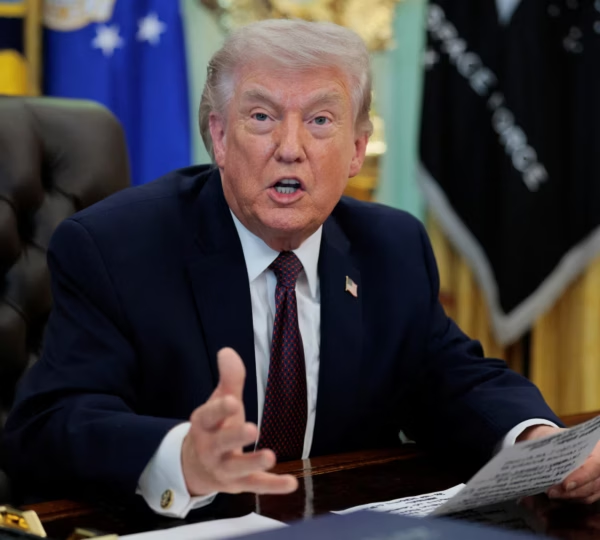
The ceasefire came only after intense diplomatic engagement involving several countries, with Pakistan playing a key role in mediation, and other governments quietly encouraging a negotiated resolution rather than outright military escalation.
Reports also indicated that China exerted pressure on Iran to show flexibility, citing worries about broader economic fallout from a prolonged conflict, while other regional actors helped bring both sides toward compromise.
Trump framed the ceasefire as a diplomatic achievement, announcing that Iran had agreed to present what he called a “workable basis” for continuing negotiations, a statement that drew varying interpretations at home and abroad.
Iran’s 10‑point proposal, as reported by multiple sources including state media and international outlets, includes conditions that Washington has historically opposed, underscoring how challenging negotiations ahead may be if both sides remain firm.
Among these reported conditions are demands for a permanent non‑aggression pact, recognition of Iran’s right to nuclear enrichment, lifting of all primary and secondary U.S. sanctions, and a U.S. military withdrawal from the broader Middle East.
Tehran also reportedly seeks continued control over the Strait of Hormuz, compensation for wartime damages, termination of UN and IAEA resolutions against the country, and the formal cessation of conflict across all fronts.
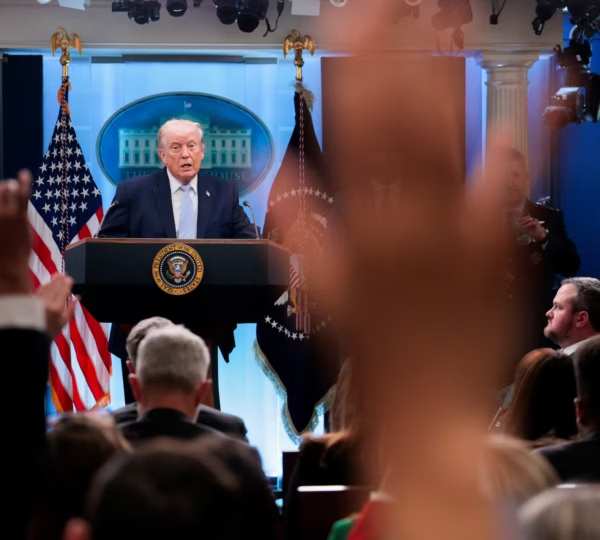
While Tehran’s official state media claims these are the terms it would like, there is debate about how much of the proposal the U.S. is actually willing to entertain, and which points can feasibly be negotiated.
At the center of the ceasefire agreement is the Strait of Hormuz, a vital chokepoint through which about one‑fifth of the world’s seaborne oil supply passes, making its control and security essential for global markets.
Under the ceasefire, Iran agreed to allow controlled traffic through the strait for the two‑week pause, a critical step in reducing fears of broader economic disruption caused by a closed waterway.
In return, the United States agreed to suspend offensive operations, including plans once discussed to expand strikes on Iranian infrastructure, at least for the duration of the truce.
White House Press Secretary Karoline Leavitt hailed the ceasefire as a significant achievement, calling it a “victory for the United States,” and framing the operation as having met its goals ahead of schedule.
Leavitt said U.S. forces achieved their objectives in the campaign — dubbed Operation Epic Fury — in just 38 days, earlier than the originally projected 4–6 week timeframe, crediting military capabilities and strategy for that outcome.
Despite the White House’s positive language, some international observers described the truce differently, suggesting that Trump’s decision to accept a ceasefire effectively postponed military confrontation, giving Iran diplomatic leverage.
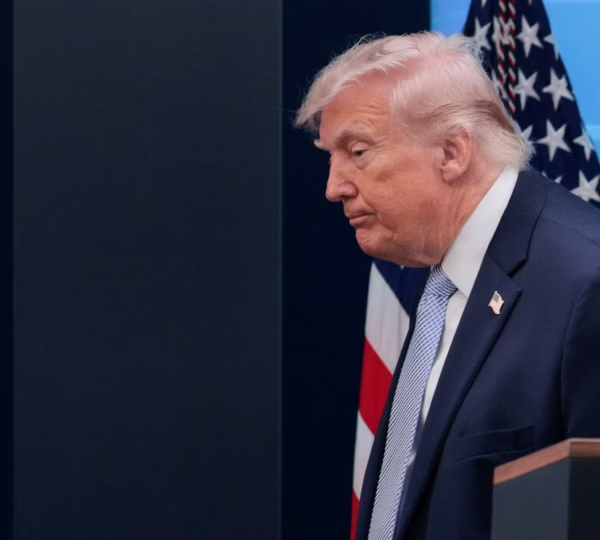
Sky News U.S. correspondent Mark Stone and others interpreted the agreement as a significant retreat from Trump’s more aggressive public rhetoric, noting the absence of a decisive U.S. strategic advantage in the final accord.
Just hours before the ceasefire was announced, Trump had publicly warned that Iran’s failure to meet conditions could result in widespread devastation, a warning that drew criticism and alarm from legal experts worldwide.
Many legal scholars had warned that strikes targeting civilian infrastructure like power plants or transportation hubs could violate international law, raising serious concerns about the conduct of military action.
The last‑minute diplomatic breakthrough averted those strikes and shifted the focus toward negotiations — even as crucial details of Iran’s ten‑point plan remain unclear or disputed between Persian and English language versions.
In particular, Iran’s inclusion of a clause about nuclear enrichment rights reportedly appears in the Persian version but was missing from English translations, sparking confusion and debate about how negotiators will handle the issue.
Israeli leaders also expressed support for the ceasefire, though they clarified that the deal did not cover Israel’s ongoing military operations against Hezbollah in Lebanon, which remain separate from the U.S.–Iran diplomatic window.
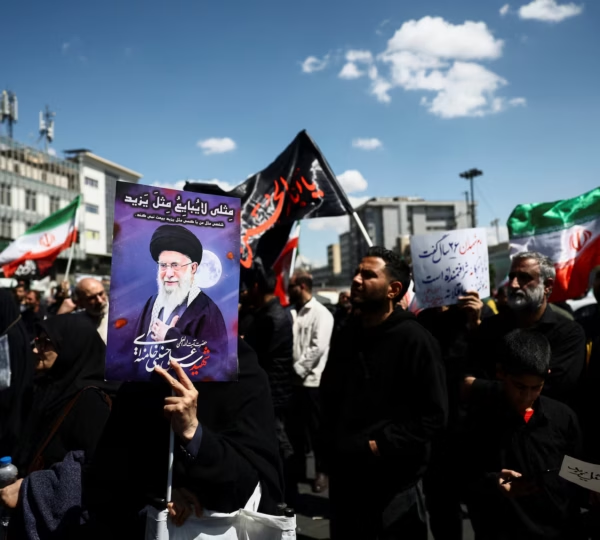
The pause in hostilities provides a short window for continued talks in Islamabad, where mediators like Pakistani Prime Minister Shehbaz Sharif hope to nurture a broader diplomatic path to peace beyond the provisional truce.
Despite the conditional peace, deep skepticism exists among analysts about whether all points of Iran’s proposal will be accepted by the United States, especially regarding sanctions and military withdrawals.
Many experts believe that Iran’s list of demands may serve as a basis for negotiation rather than a final settlement, with each side expected to compromise on core sticking points over time.
Some commentators view the ceasefire as a diplomatic necessity at a moment of heightened global tension, a temporary stand‑down that may be the first step toward a longer‑term agreement if negotiations continue constructively.
At the same time, Israel’s support for the truce is not universal, and military activity involving other Middle Eastern actors continues in parallel theaters, adding complexity to the overall regional security picture.
Media coverage of the ceasefire and Iran’s plan has highlighted the ambiguity of the agreement’s terms, the lack of a final peace treaty, and the challenges in translating diplomatic intent into enforceable outcomes.
Reactions in Washington were mixed, with some lawmakers and commentators praising the halt to direct hostilities while also urging clearer congressional oversight and strategic direction for U.S. foreign policy.
Supporters of the ceasefire emphasize that it reduces the immediate risk of large‑scale conflict in the Middle East, which could have broader global implications for security, energy markets, and international relations.
Critics, however, argue that a two‑week pause may do little more than defer deeper disagreements, with underlying tensions and policy disagreements still unresolved and potentially reigniting future hostilities.
The potential economic impact of the ceasefire is also significant, especially given the importance of the Strait of Hormuz to global energy supplies and the ripple effects on oil markets and supply chains should tensions return.
International shipping companies remain cautious, noting that even temporary pauses in conflict may not guarantee long‑term stability for transport routes that underpin global trade and commerce.
As negotiations continue, key questions remain unresolved, including whether sanctions will be lifted, whether U.S. forces will fully withdraw from regional deployments, and how nuclear oversight will be handled.
Lawmakers in the United States, including members of both parties, have called for clearer direction from Congress on foreign engagements and for a transparent framework that ensures accountability for future diplomatic and military actions.
Some officials have also urged the administration to clarify whether Iran’s demands over territorial control of strategic waterways are compatible with long‑term U.S. interests in freedom of navigation.
Despite the ceasefire, uncertainty remains about whether Iranian and American negotiators will reach a lasting settlement that satisfies both governments’ red lines without sacrificing core international security principles.
The next few days and weeks are expected to be critical as negotiators gather in Islamabad to work through disputed points, including the fate of sanctions, military postures, and nuclear oversight mechanisms.
At home, the ceasefire has triggered discussions about America’s role in global conflict, the limits of military power, and the importance of diplomacy in averting costly and destructive wars.
American public opinion has shown signs of fatigue with prolonged military engagements abroad, with many voters emphasizing domestic concerns over foreign intervention as a priority in upcoming political cycles.
Regional leaders continue to call for sustained dialogue, pressing both the United States and Iran to address not just the symptoms but the underlying causes of the conflict.
Humanitarian organizations have also welcomed the ceasefire, noting that reduced violence can allow for greater access to aid and support for civilians affected by years of instability in the region.
Yet, any return to open hostility would carry grave consequences for civilian populations, energy markets, and global diplomatic relations, emphasizing the delicate balance now in play.
For now, the truce stands as a conditional peace, dependent on continued negotiations, reciprocal compliance, and diplomatic will from both sides to transform a temporary ceasefire into a durable agreement.
As talks begin in earnest, world leaders and analysts alike will be watching closely, hopeful that meaningful progress can be made and wary that old tensions could reemerge if key issues remain unresolved.
Only time will tell whether the “workable basis” that Donald Trump described will lead to a lasting peace, or whether the ceasefire is a brief respite in a conflict that may continue in new forms.