For more than seven decades, Dolly Parton has remained one of the most recognizable, enduring, and influential figures in American popular culture. In an industry known for constant reinvention and fleeting fame, few artists have managed to sustain relevance for as long—or with as much intention—as she has. Her career spans multiple generations, musical genres, and cultural shifts, yet her presence remains…
For more than seven decades, Dolly Parton has remained one of the most recognizable, enduring, and influential figures in American popular culture.
In an industry known for constant reinvention and fleeting fame, few artists have managed to sustain relevance for as long—or with as much intention—as she has.
Her career spans multiple generations, musical genres, and cultural shifts, yet her presence remains unmistakable.
While recent years have sparked renewed online attention focused on her changing appearance, reducing Dolly Parton’s evolution to surface-level transformation misses the deeper truth.
Her story is not about age, trends, or public approval. It is about control, creativity, resilience, and self-definition.
Humble Beginnings in Rural Tennessee
Dolly Rebecca Parton was born on January 19, 1946, in a one-room cabin in Sevier County, Tennessee. She was the fourth of twelve children raised by parents who struggled to make ends meet in extreme poverty.
Her father worked as a tobacco farmer, while her mother played a central role in nurturing the family’s musical traditions.
Music was not an extracurricular activity in the Parton household—it was woven into daily life. Church hymns, Appalachian folk songs, and storytelling formed the foundation of Dolly’s early creative education.
Despite limited material resources, her childhood was rich in emotional experience, which would later become a defining feature of her songwriting. By the time she was a child, Dolly had already begun performing publicly.
She appeared on local radio and television programs in East Tennessee before the age of ten, displaying not only remarkable vocal talent but also an unusual level of confidence. Even then, she understood that performance was about more than sound—it was about presence, storytelling, and connection.
Early Ambition and a Clear Sense of Purpose
From a young age, Dolly Parton demonstrated a rare sense of ambition and clarity. She began writing songs as a child, often drawing directly from her life experiences.
Themes of hardship, family, faith, and longing appeared early in her work. After graduating high school in 1964, she moved to Nashville the very next day, determined to build a career on her own terms.
This decision marked the beginning of a lifelong pattern: Dolly consistently made bold moves rooted in self-belief rather than external validation.
Her early years in Nashville were not easy. She worked as a songwriter while navigating an industry that often underestimated young women—particularly those from rural backgrounds. However, her persistence paid off. In 1967, she released her debut album, Hello, I’m Dolly.
The album established her as a serious artist with a distinctive voice and perspective. Rather than relying on novelty or image alone, she built her reputation carefully, song by song, performance by performance.
Songwriting Legacy and Cultural Impact
Dolly Parton’s songwriting catalog is among the most extensive and influential in modern music history. With over 3,000 songs to her name, she has created works that transcend genre boundaries and generational divides.
Songs such as “Jolene,” “Coat of Many Colors,” and “I Will Always Love You” are not merely commercial successes—they are cultural landmarks.
“I Will Always Love You,” originally written as a farewell to professional partner Porter Wagoner, later achieved global recognition through Whitney Houston’s rendition.
Despite the song’s worldwide success, Dolly retained full ownership of the composition—a decision that has often been cited as a masterclass in artistic and financial independence.
Her business acumen has consistently matched her creative output, allowing her to maintain long-term control over her work.
What sets Dolly apart as a songwriter is her emotional accessibility. Her lyrics are simple yet profound, personal yet universal.
Scholars, critics, and musicians have analyzed her work for its narrative clarity and emotional honesty. Her songs continue to be covered by artists across country, pop, rock, and soul, reinforcing their timeless relevance.
Crafting an Iconic Image
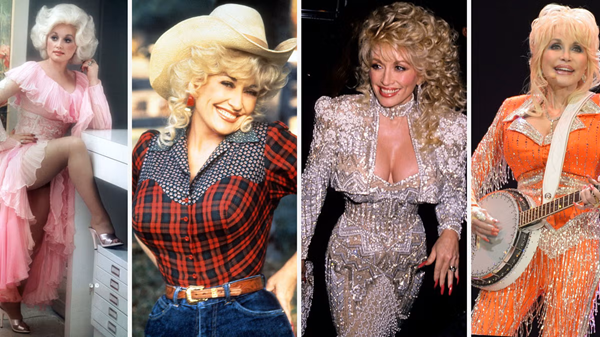
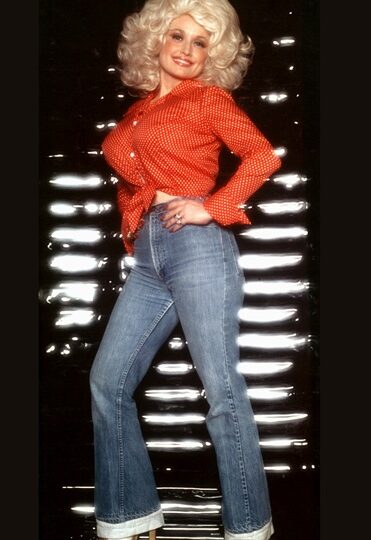
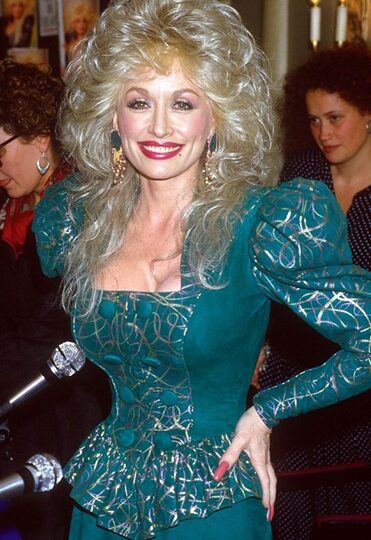
Alongside her music, Dolly Parton developed one of the most recognizable visual identities in entertainment history. Her towering blonde hair, dramatic makeup, and flamboyant wardrobe were not accidents or acts of vanity—they were deliberate choices.
During the 1970s and 1980s, particularly within the conservative world of country music, her hyper-stylized appearance challenged expectations.
Critics often dismissed her look as excessive or unserious, but Dolly was always in control of the joke. She famously referred to her style as “costly trash,” signaling self-awareness and confidence rather than insecurity.
Her image drew inspiration from the working-class women she admired growing up, particularly those who used fashion as a form of self-expression and escape.
Photographs from the 1980s show bold silhouettes, exaggerated hairstyles, and unmistakable glamour. These looks were widely imitated, parodied, and remembered—not because they were subtle, but because they were fearless. Dolly understood that visibility was power, and she used her image strategically to command attention in spaces where women were often marginalized.